
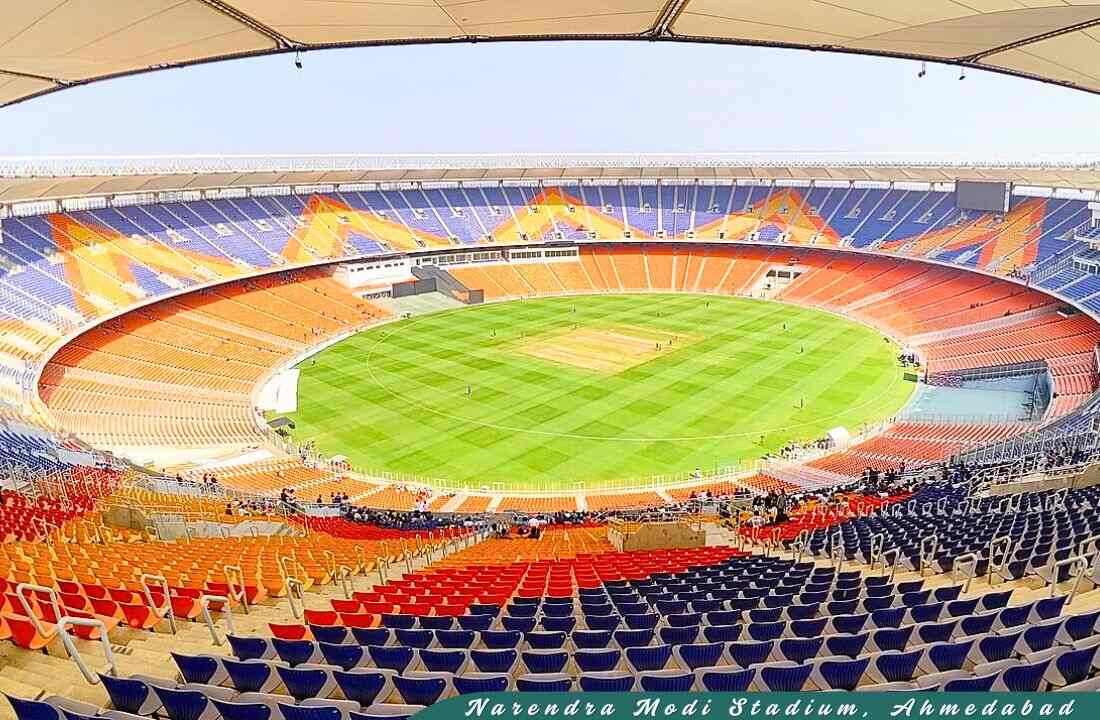
The Narendra Modi Stadium in Ahmedabad, Gujarat, is one of the world’s most prominent cricket stadiums and the biggest cricket stadium in terms of seating capacity. Built in the Motera neighborhood, this state-of-the-art arena accommodates approximately 132,000 spectators and is owned and operated by the Gujarat Cricket Association (GCA).
The stadium has been used for several major cricket events such as the final of the ICC Men’s Cricket World Cup 2023 and the ICC Men’s T20 World Cup 2026 final on March 8, 2026. It also hosts Regular IPL matches, International Cricket, Concerts and other large size events.
This article serves as a comprehensive guide to the Narendra Modi Stadium, exploring its history, location, seating capacity, stadium design, pitch conditions, local weather, ticket booking options, major match records, spectator facilities, and more
Narendra Modi Stadium Overview
Narendra Modi Stadium, Ahmedabad, Gujarat, is an International Cricket ground. It was previously known as the Sardar Patel Stadium or Motera Stadium. It is a popular venue for international cricket and major public events. The stadium is located close to the Sabarmati River and is part of Sardar Vallabhbhai Patel Sports Enclave.
Spanning an expansive 63 acres, the venue has a massive seating capacity of 132,000 spectators according to the Gujarat Cricket Association (GCA). It boasts 11 centre pitches, six indoor practice pitches, three outdoor practice fields, four team dressing rooms and 76 corporate boxes. Test matches, One Day Internationals (ODIs), Twenty20 Internationals (T20Is), IPL matches and domestic cricket are played at this stadium.
The stadium also hosts the Indian Premier League (IPL) team Gujarat Titans. It has a huge seating capacity, modern infrastructural facilities, and a wide range of cricket facilities, making it an important venue for many major domestic and international cricket matches.
| Attributes | Hosted the 2023 ODI World Cup final |
| Stadium Name | Narendra Modi Stadium |
| Location | Motera, Ahmedabad, Gujarat |
| Capacity | 132,000 spectators |
| Owner | Gujarat Cricket Association |
| Stadium Type | International cricket stadium |
| Original Construction | Built in 1982 |
| Redevelopment | Completely rebuilt by 2020 |
| Former Name | Sardar Patel Stadium |
| Stadium Area | Spread across 63 acres |
| Field Size | 180 yards × 150 yards |
| Practice Facilities | Six indoor and three outdoor pitches |
| Corporate Boxes | 76 boxes with 25 seats each |
| Major Event | Hosted 2023 ODI World Cup final |
| Home IPL Team | Gujarat Titans |
| Notable Record | Sunil Gavaskar reached 10,000 Test runs here |
History of Narendra Modi Stadium
The Original Motera Stadium
The original stadium was built in the early 1980s and was earlier called Sardar Patel Stadium (frequently referred to as Motera Stadium). It became a significant cricket ground in Gujarat and later played host to international cricket matches for many decades. A great deal of historic events happened on the Motera ground, such as Sunil Gavaskar’s and Kapil Dev’s achievements in Indian cricket.
- Sunil Gavaskar became the first-ever batsman in Test cricket to reach 10,000 runs when he scored 10,000 runs in 1987.
- In 1994, Kapil Dev achieved his 432nd wicket in Tests, which broke the previous record (held by Richard Hadlee at the time) of 431 wickets in Tests.
Reconstruction of the Stadium
Following a major remodeling in 2006, the original structure was closed and entirely demolished in 2015. The project to build the new stadium started in 2015 and was completed in 2020, making it a modern and up-to-date cricket stadium with a much larger capacity and better facilities for spectators.
The redevelopment was completed in February 2020 with an estimated cost of around ₹800 crore. The new stadium was designed to be able to host big crowds and be used for both international cricket and domestic tournaments and major public events.
Opening and Renaming
The redeveloped stadium was used for the Namaste Trump event in February 2020. On 24 February 2021, the stadium was renamed to Narendra Modi Stadium, in honour of India’s Prime Minister. The stadium then played host to its maiden redeveloped Test match in the India-England series in February 2021.
After the recent reopening, it has seen significant cricketing events such as major international cricket games, IPL tournaments, and international sporting events since then, further building its reputation as one of India’s most iconic cricket grounds.
Narendra Modi Stadium Address and Location
The Narendra Modi Stadium is located on Stadium Road, in the Motera neighborhood of Ahmedabad, Gujarat, India. The widely stated address is Narendra Modi Stadium, Stadium Road, Motera, Sabarmati, Ahmedabad, Gujarat 380005, India.
The stadium is located close to the Sabarmati River and is a part of the Sardar Vallabhbhai Patel Sports Enclave. It is linked with the road and metro network of Ahmedabad, ensuring that the city’s residents and visitors can access it. If you are watching a big game, please consult the entry gate and traffic signs that have been posted for the specific game before traveling to the match.
Narendra Modi Stadium Seating Capacity
Narendra Modi Stadium has an official seating capacity of 132,000. It is the largest cricket stadium by seating capacity, as per the International Cricket Council and the Gujarat Cricket Association.
There are seating areas for the general public, premium, and corporate audiences. It offers 76 corporate boxes, which offer further hospitality facilities, and the GCA states that each box can accommodate 25 guests.
There are certain sporting events in India, like IPL, World Cup matches, finals, and international cricket matches, when the demand is particularly high for tickets. The availability and price of tickets are subject to the match, type of seats, the tournament, and the event organiser. Please note visitors will need to check official ticketing announcements prior to travel plans.
Narendra Modi Stadium Dimensions and Design
Field Size
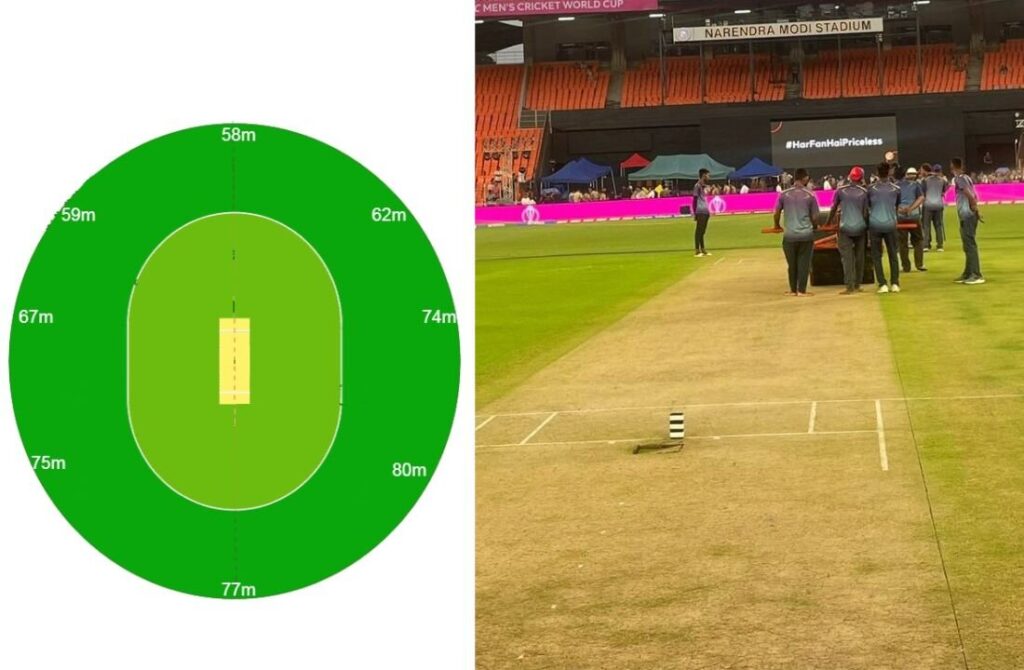
As per the official specification of the Gujarat Cricket Association, the actual playing area measures approximately 180 yards × 150 yards. Although the playing field plays a crucial role in shaping batting and bowling strategy, the specific distances of these massive boundaries are defined around match-day rope placements.
You only have to think of the ground size and how that affects the plan, with batters tending to pick which corner they are going for and bowlers mapping their deliveries accordingly. But these tactical options will always be tempered by live pitch conditions, local climatic trends, outfield preparation, and the specific play-style of both teams going head to head.
Stadium Design
The Narendra Modi Stadium is designed as a contemporary cricket stadium featuring a spacious seating bowl, several entrances for the spectators, and a wide range of facilities for the players and the spectators. It’s the world’s largest cricket stadium by seating capacity, with 132,000 capacity.
The stadium’s structure enables a large number of people to attend games of international cricket matches, IPL games and other major events. It also has corporate hospitality spaces and team/ cricket practice facilities.
Practice and Cricket Facilities
There are 11 centre pitches, 6 indoor practice pitches and 3 outdoor practice fields in the stadium. It also has four dressing rooms for teams, an indoor cricket academy and 76 corporate boxes. The Gujarat Cricket Association has previously said that the seating capacity in a corporate box in a cricket stadium is 25 people.
These are used for professional cricket, team preparation and domestic cricket. The sports ground’s accommodation also makes it possible to host large sporting events which demand a great deal of preparation for players, officials, media representatives and spectators.
Narendra Modi Stadium Pitch Report
Narendra Modi Stadium has 11 centre pitches with various types of soil. Players and spectators need to be aware of the surface conditions as they can affect the pitch on which a match is played, such as pace, bounce, grip and spin.
Red-Soil and Black-Soil Pitches
Red soil and black soil are used to prepare pitches in the stadium. Generally, a red soil pitch will have good pace and bounce, and a black-soil surface will offer more grip and help the slower bowlers and spinners under the right conditions.
These are general characteristics, however—and not rules. The actual pitch condition will affect pitch behaviour, depending on the type of strip used, how it was prepared, the moisture content, the weather and the wearing of the pitch during the match. It is therefore a pitch report and not the reputation of the stadium that should be used as the basis for the pitch report.
T20 and IPL Pitch
Narendra Modi Stadium has seen high-scoring T20 games, but every game is not necessarily the batters’ home. The surface, boundary conditions, bowling attack, and weather conditions are all factors that can impact the final score.
A high-scoring match was seen at the venue when the ICC Men’s T20 World Cup final was played in 2026. India bowled out New Zealand for 159 runs in 19 overs while India scored 255/5 in 20 overs. India won by 96 runs in the final.
These are only the type of match conditions when the venue’s scoring potential is shown in these figures. But it’s not a lock, as the T20 and IPL matchups in the future can lead to different outcomes based on the pitch conditions and the formations of the teams.
ODI Pitch
The ODI pitch of the Narendra Modi Stadium can be a blessing for both the batters and bowlers. A consistent bounce and pace on the surface can make it easier for batters to play attacking shots and develop partnerships.
Slow surfaces can introduce spinners and/or change-of-pace bowlers into the game, especially in the middle overs. Conditions can also impact how the teams would go about their innings, depending on the weather, dew and Ball condition. So, instead of making generalisations about the venue, it is more important to consider the pitch used for each match.
Test Match Pitch
Narendra Modi Stadium has played host to Test matches on surfaces that have been most accommodating to spin bowling. In February 2021, the day-night Test match between India and England ended within two days, and was of great interest due to its short duration.
The conditions of a match should not be used as an indicator for all of the Tests that will be played there. How a Test match plays out can be influenced by a number of factors, including the preparation of the pitch, type of ball, weather and the strengths of the two sides.
Simple Pitch Tip
Prior to the pitch being assessed at Narendra Modi Stadium, the surface chosen for the game, weather conditions, moisture, dew and pitch preparation need to be taken into account. Recent match reports can be helpful, but can’t be relied upon to predict future match conditions or scores.
Weather Conditions
The weather forecast for Narendra Modi Stadium is a sunny day with a high of 35°C to 37°C. The summers are generally hot in Ahmedabad; the weather becomes monsoonal during the summer and autumn and gets cooler during the winter months. The season is generally summer from March to June, with very high temperatures during the day. The monsoon season normally occurs in July, August, and September and is accompanied by higher humidity and rainfall.
Winter typically runs from October to February and is relatively cooler. Most of the time it’s easier to be a fan around town in this time of year, but it is typically very dry and pleasant during the day, with cooler temperatures at night.
However, dew can also impact evening cricket at times throughout the year. The bowl, outfield, or the ball can become slippery when it is wet, making it more difficult for bowlers to get a firm grip. On the day of a match, spectators should consult the local weather forecast and dress appropriately for the day.
Narendra Modi Stadium floodlights
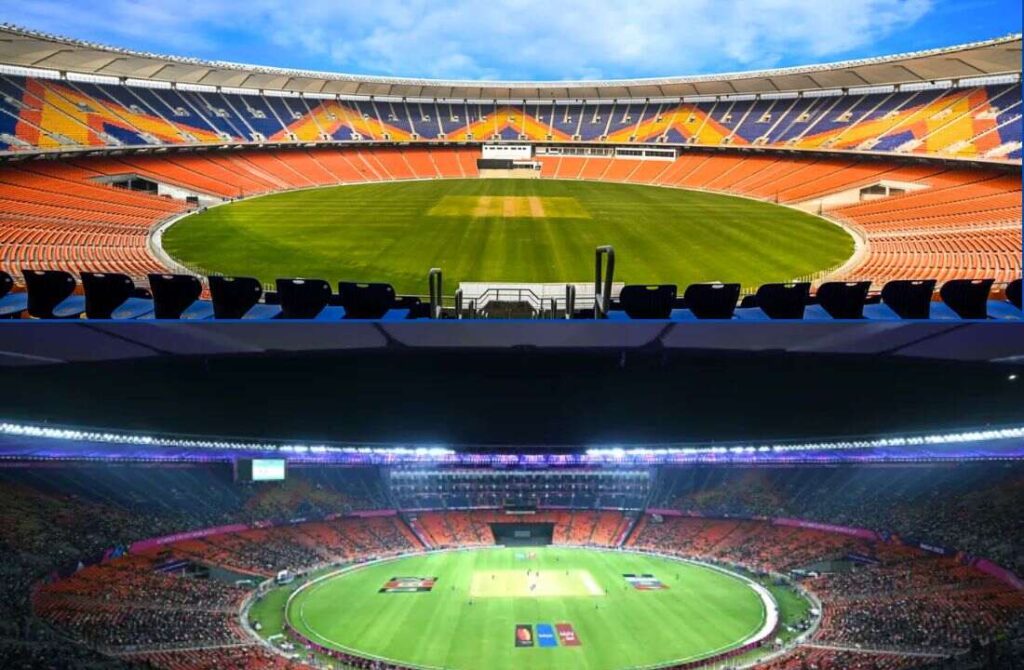
The lighting system in Narendra Modi Stadium completely eliminates traditional tall floodlight towers, opting instead for a ‘Ring of Fire’ LED system that is integrated into the roof structure of the stadium. This is set up to ensure proper lighting throughout the field for day-night cricket.
The lighting setup enables international cricket and other major events to be run at the stadium. It is also used to enhance the presentation of the stadium during night-time games and entertainment events.
Rain and Drainage Facilities
While Ahmedabad’s primary cricket season typically doesn’t overlap with its rainy season, it can still dampen the spirit of a game. Ground infrastructure, drainage facilities and pitch cover facilities are modern and are provided to help protect the pitch.
The time it takes to return to play will vary depending on the amount of rain, outfield conditions, drainage, and the decision of the match officials. So it is not sensible to presume that the entire field will be playable every time in a given interval of time.
Days and other rain-related provisions for major tournaments are based on official playing conditions of the tournament. The spectators must listen to the announcement of the respective tournament organiser for information regarding possible delays, interruptions, and rescheduling of the match.
Narendra Modi Stadium Ticket Prices
There’s no set ticket price for Narendra Modi Stadium. Depending on the type of match, seating category, tournament, and pricing system that the organiser has set up, the prices will differ. Other seating options, such as hotel packages and corporate seats, can be priced differently from spectator seating as well.
The prices of IPL finals, international cricket matches of India, and World Cup matches could be different from the regular domestic cricket games. Availability of tickets can also be subject to rapid change with high-profile fixtures, so visitors need to check the current information before booking their tickets.
How to Book Tickets Safely
For tickets to a match at Narendra Modi Stadium, please refer to the official announcement made by the BCCI, ICC, Gujarat Cricket Association, Gujarat Titans, or the authorised ticketing partner for the match. Before buying the tickets, check the match day and venue, seating category, and ticket conditions.
Be careful not to purchase tickets from people you don’t know on social media or from ticket prices that have been posted in the past. The prices may vary from one event to another, as well as the conditions and availability to enter the events; the official announcement should be regarded as the main source of information.
How to Reach Narendra Modi Stadium
By Metro
Nearly lies the Motera Stadium Metro Station which offers a public transport facility to many visitors to the stadium. One of the advantages of travelling by metro is that it can help to prevent some of the road congestion that can occur around the venue during big matches.
For travel, please consult the current operating status of the metro, any updates, and any special transport arrangements in connection with the event. For late evening matches, this is especially important because of operating schedules, which could influence the return trip.
By Road
The stadium is well connected with major roads of Ahmedabad, and you can get here by taxi, auto-rickshaw, or app-based cab service. Spectators from around the city can travel by road.
But during and after big games, traffic can be a lot more congested. Visitors will be given extra travel time, and the instructions for traffic management by the police or event organiser must be followed.
By Train
The city’s largest railway station is Ahmedabad Junction or Kalupur Railway Station, which is a few kilometres away from Narendra Modi Stadium. People coming by train can take advantage of the metro, taxi, or other public transportation to arrive at the site.
Traffic conditions and the route or mode of transportation for getting to the stadium will influence the time needed to reach the stadium. It is advisable for travellers to consult local transport information before heading off from the railway station.
By Air
Sardar Vallabhbhai Patel International Airport is Ahmedabad’s airport and connects Ahmedabad to various domestic and international destinations. Air travelers can reach Narendra Modi Stadium by road via taxi or app-based taxi services.
Travel time will depend on traffic conditions and the route taken. In high-profile matchups, extra time should be reserved for transfers to and from the airport and for queueing for entry into the stadium.
Parking
Narendra Modi Stadium’s parking will be subject to change based on the match or event. It is important for visitors to adhere to the instructions given on their ticket and/or in the official event announcements and not those to previous games.
Seeing the parking that is available, as well as where to park and what traffic controls are in place beforehand, can help minimize delays on match day.
Major Matches and Historic Moments
1987: Sunil Gavaskar Reaches 10,000 Test Runs
In 1987, Sunil Gavaskar hit the milestone of 10,000 runs in Test cricket on the old Motera ground, making it the first time the venue would become a part of cricket history. It was a significant achievement in Indian cricket and a noteworthy occasion with regard to the venue’s association with a significant milestone in cricket history.
In 1994, Kapil Dev took his 432nd Test wicket
In 1994, Kapil Dev took his 432nd wicket in Test cricket from Richard Hadlee’s previous record of 429 wickets, thereby surpassing the record. The feat was one of the many highlights of the old stadium.
2021: Day-Night Test
In February 2021, the Narendra Modi Stadium was revamped for a day-night Test match between India and England. The match was completed in two days, highlighting the conditions of the match and the support provided to bowlers during the match.
2022: IPL Final
The 2022 IPL final was held at the Narendra Modi Stadium, which Gujarat Titans won with a victory over the Rajasthan Royals to secure their maiden IPL title. The match was significant for Gujarat Titans as it was their debut season in the tournament, making them only the second franchise in IPL history to win the trophy in their very first year.
2023: India vs Pakistan
India played Pakistan in the ICC World Cup 2023 at Narendra Modi Stadium. The Indians emerged victorious in the game, maintaining their series-winning streak against Pakistan in ODI World Cup games at the time.
The match was a significant event in the stadium’s history and showcased the venue’s capabilities for hosting international cricket matches.
2023: ODI World Cup Final
Narendra Modi Stadium was the venue for the ICC Men’s Cricket World Cup Final between India and Australia on 19 November 2023. Australia went on to win the game and their sixth men’s ODI World Cup title.
One of the most important cricket matches ever played at the stadium was the final match, which drew international attention to Ahmedabad as a top city for hosting sporting events.
2025: Coldplay Concert
In January 2025, Coldplay performed at Narendra Modi Stadium as part of their Music of the Spheres World Tour. The series showcased the venue’s suitability for hosting large-scale entertainment events, beyond just cricket.
The January 26th event was estimated to be attended by 111,989 people. This is not the official cricket seating capacity of the stadium, but rather refers to the concert.
2026: T20 World Cup Final
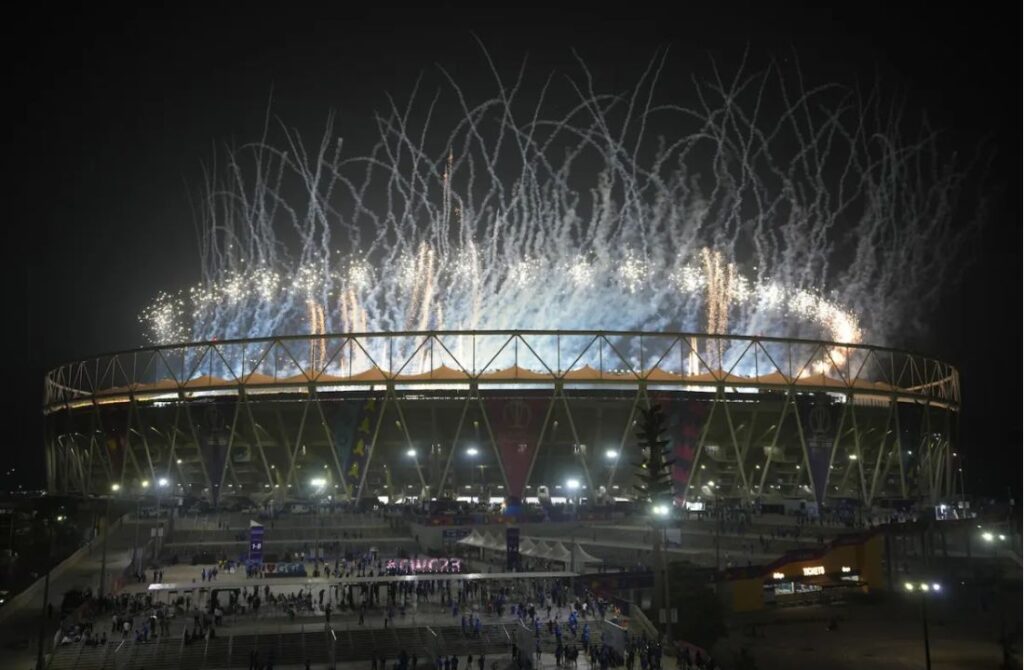
The ICC Men’s T20 World Cup final will take place on 8 March 2026 at Narendra Modi Stadium. India consolidated on 255/5 in 20 overs; since New Zealand was bowled out for 159 in 19 overs, India won the game by 96 runs.
India’s 255/5 was the top Team score in a Men’s T20 World Cup final. The match marked yet another giant leap in the stadium’s global history.
Records and Highlights
- Narendra Modi Stadium is known as the world’s largest cricket stadium based on seating capacity, having about 132,000 seating capacity.
- It is a significant venue for important international cricket events, having hosted the 2023 ICC Men’s Cricket World Cup final and the 2026 ICC Men’s T20 World Cup final.
- The record most points any team has scored in a T20 World Cup final is 255/5 for India, who beat New Zealand in their final clash of the 2026 T20 World Cup.
- Other records relating to the old Motera ground are Sunil Gavaskar’s 10,000th Test run in 1987 and Kapil Dev’s 432nd Test wicket in 1994.
- The stadium has also played host to some of the biggest IPL games, such as the 2022 final that saw the Gujarat Titans secure their maiden title.
- The stadium has also hosted big entertainment shows, such as concerts by Coldplay in January 2025.
Narendra Modi Stadium Upcoming Matches
Future matches at the Narendra Modi Stadium should be made official via the cricket schedules, as fixtures, dates, and venues may change. The BCCI has published its home-season schedule for 2026-27, and India will play Sri Lanka in the third ODI at Ahmedabad on 19th December 2026.
There is also a BCCI Test in Ahmedabad that will run from 27 February to 3 March 2027. If travelling to either match, please check the final match venue, match time, and ticket warning. Separate announcements may be made for domestic cricket matches and other events. Being a Gujarat or Gujarat-based team should not be enough to assume that a fixture is being played at Narendra Modi Stadium.
Fans Facilities and Tips
Facilities
Narendra Modi Stadium has a variety of facilities for its fans, players, and event organizers. These include large seating areas, food and beverage facilities, washrooms, spectator circulation areas, and corporate hospitality boxes. There are also team dressing rooms, practice pitches, outdoor practice fields, and an indoor cricket academy.
There are several entry points in the stadium, which help in the smooth flow of people during big events. Some events may not have accessibility arrangements or other facilities for visitors, and visitors requiring specific facilities should check the information provided by the organiser before attending the event.
Tips for First-Time Visitors
The people who are going to witness the first test match at Narendra Modi Stadium should be ready early for any match that is being played in the future, especially international matches and IPL matches. Making your way to the venue early may give you more time for security screening, entry, and locating the right section.
It is possible to cut travel times if the metro runs at an appropriate time. We would recommend that visitors have their tickets with them and check the list of prohibited items before leaving home, and only bring the items listed on the permitted items list.
Loose-fitting clothes can help keep you comfortable if you’re in the stands for an extended period of time, and sunblock can be beneficial in the daytime matches. Before travelling, spectators should also consult the forecast and be sure to know the entry gate and adhere to the directions for transportation and parking given by the officials.
Conclusion
Narendra Modi Stadium is one of the biggest sports stadiums in the world and a significant landmark in Indian sports. It is a 11 centre pitches cricket stadium with a seating capacity of about 132000 with extensive cricket facilities and is become an important playing ground for international cricket, IPL matches and major sporting events.
It was the original Motera Stadium that dates back to the past before the stadium was redeveloped, hosting events like the ODI World Cup final in 2023 and the T20 World Cup final in 2026. It has state-of-the-art infrastructure, seating capacity, and connectivity, and is a significant attraction for cricket enthusiasts in Ahmedabad.
Also, Read –
PCA New Cricket Stadium (Mullanpur): History, Records, Pitch, Weather, Ticket Prices and More
